
Are you hunting for the ultimate PlayStation 5 controller breakdown before your next gaming session? Whether you’re curious about official Sony options or third-party alternatives, this guide has you covered. In this article, you’ll learn about features like haptic feedback, adaptive triggers, battery life, fit, comfort, and which controllers dominate certain playstyles. By the end, you’ll know exactly which PS5 controller suits your gaming needs best.
What Makes PlayStation 5 Controllers Stand Out
The core appeal of PS5 controllers lies in next-generation features that go beyond simple input. Here’s what you’ll find in most top PS5 controllers today:
Adaptive Triggers & Haptic Feedback
One of the biggest advancements in PlayStation 5 controllers is adaptive trigger technology, which can adjust tension based on game context — like the tension when drawing a bow or braking in a racing game. This pairs with haptic feedback, replacing traditional rumble with nuanced vibrations that approximate real sensations.
Built-In Communication Tools
The DualSense controller includes a built-in microphone and speaker, letting you chat or hear in-game cues without a headset — a small but impactful upgrade over older models.
Ergonomics & Design
PlayStation 5 controllers shifted to a two-tone, ergonomic design that’s more substantial in the hands than previous generations and aims to improve comfort during extended play sessions.
What You’re Really Looking For Search Intent
Most readers searching for PlayStation 5 controllerswant to know:
- What features define a good PS5 controller? (adaptive triggers, haptics, battery)
- Which controllers are best for my playstyle? (competitive, casual, budget)
- What alternatives exist beyond the Sony DualSense?
- Are third-party options worth it?
By the end, you’ll have clear buying recommendations, pros and cons, and real reasons for choosing one pad over another.
Here is your medium-sized extended version — detailed, clear, but not too long.
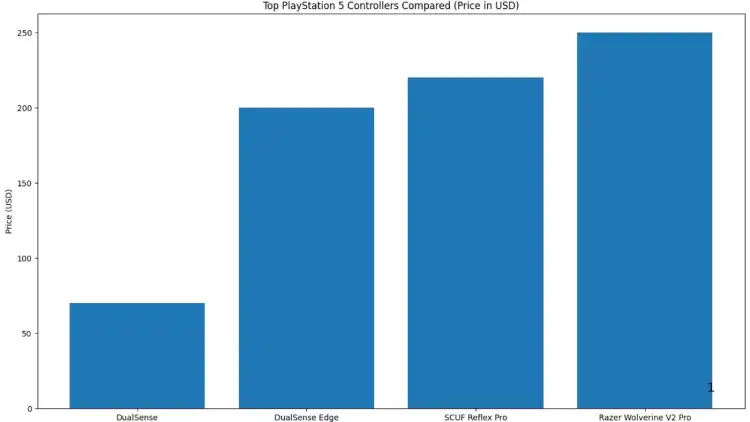
Top PlayStation 5 Controllers Compared
Choosing between different PlayStation 5 controllers can feel overwhelming. Sony offers two main official options: the standard DualSense and the premium DualSense Edge.
Each one targets a different type of gamer. Below, you’ll find a clear breakdown to help you decide which controller matches your playstyle.
Comparison
| Feature | DualSense | DualSense Edge |
|---|---|---|
| Adaptive Triggers | ✅ | ✅ |
| Haptic Feedback | ✅ | ✅ |
| Back Buttons | ❌ | ✅ |
| Custom Profiles | Limited | Full |
| Replaceable Sticks | ❌ | ✅ |
| Price | Standard | Premium |
Sony DualSense – The Standard PS 5 Experience
Overview:
The DualSense is the default controller that comes with every PS5. It’s designed to deliver immersive gameplay while staying affordable and comfortable for most players.
For casual and story-focused gamers, this is usually the best choice.
Key Features
Adaptive Triggers & Haptic Feedback
The biggest upgrade in the DualSense is adaptive trigger technology. The L2 and R2 buttons adjust resistance depending on in-game actions.
For example:
- Drawing a bow feels tight.
- Braking in racing games feels realistic.
- Different weapons create unique trigger pressure.
The haptic feedback system replaces basic vibration with detailed sensations. You can feel footsteps, explosions, or weather effects in a more realistic way.
Built-In Microphone & Speaker
The controller includes:
- A built-in microphone
- Internal speaker
- 3.5mm headset jack
You can quickly chat without plugging in a headset, which is convenient for short multiplayer sessions.
USB-C Charging & Wireless Support
The DualSense uses USB-C charging, offering faster and more reliable power. It also supports Bluetooth for smooth wireless gameplay.
Battery life averages around 10–12 hours, depending on how heavily you use haptics and triggers.
Pros & Cons
✅ Pros
- Strong immersion features
- Comfortable ergonomic design
- Fully supported by all PS5 games
- Good value for price
❌ Cons
- Average battery life
- No back buttons for competitive gaming
- Some users report stick drift over time
Why It Matters
The DualSense is built specifically to showcase what the PS5 can do. Many exclusive games are designed around its haptic and trigger features.
If you want the full next-gen experience without spending extra, this controller delivers exactly that.

Sony Dual Sense Edge – Pro-Level Customization
Overview:
The DualSense Edge is Sony’s premium controller designed for competitive players who want advanced customization and better control.
If you play shooters, sports games, or ranked multiplayer, this controller gives you extra precision.
Standout Features
Remappable Buttons & Profiles
You can:
- Remap buttons
- Create multiple control profiles
- Switch profiles instantly
This helps you optimize controls for different games.
Swappable Stick Modules
The Edge allows you to:
- Change stick caps
- Replace stick modules if drift occurs
- Adjust stick sensitivity
This improves longevity and aiming accuracy.
Back Buttons & Trigger Adjustments
The controller includes:
- Back paddles for faster reactions
- Adjustable trigger travel distance
- Fine-tuned sensitivity controls
These features are especially useful in competitive FPS games.
Pros & Cons
✅ Pros
- Advanced customization options
- Replaceable stick modules
- Back buttons for competitive advantage
- Premium build quality
❌ Cons
- Higher price point
- Slightly shorter battery life than the standard DualSense
- May be unnecessary for casual gamers
Third-Party Controllers – Alternatives You Should Know
For some gamers, alternatives to Sony’s controllers can offer perks like different shapes, buttons, or modules — but they often sacrifice core PS5 innovations.
Licensed Third-Party Units
- Modular designs: Some let you swap sticks or buttons for personalization.
- Pro controllers: Enhanced grips and extra buttons for competitive play.
Pros
- May offer improved ergonomics or battery options
- Often built for specific game genres
Cons
- Many lack full haptic/adaptive support — your immersive experience might be limited.
- Can be pricier with fewer core features
H3: Unlicensed Aftermarket Options
- Budget-friendly but often lack Sony’s full feature set.
- Quality and durability can be inconsistent.
Suggestion: Only consider these if you’re on a tight budget and don’t need adaptive triggers or haptics.
Bonus: How Controller Versions Have Evolved
Sony has quietly adjusted PS5 controller internals over time. The newer DualSense V2 variant reportedly offers significantly improved battery life, with some tests suggesting upwards of 15 + hours of play.
This is important because battery longevity dramatically affects your experience, especially if you play for long stretches.
Choosing the Right PS5 Controller for You
Whether you’re casual, competitive, or somewhere in between, here’s how to think about your choice:
Casual Gamers
- Best choice: Standard Sony DualSense
- Why? Balanced features, affordability, and excellent game support
Competitive & Pro Players
- Best choice: Sony DualSense Edge or high-end licensed third-party controller
- Why? Custom buttons, profiles, and maximized performance
Budget-Focused Players
- Best choice: Licensed third-party or discounted DualSense — but beware of missing features or quality trade-offs

Final Thoughts
Choosing between different PlayStation 5 controllers really comes down to your gaming style and expectations.
If you want immersive gameplay with full next-gen features, the standard DualSense is more than enough. It delivers adaptive triggers, rich haptics, and comfort at a reasonable price, making it ideal for most players.
However, if you’re serious about competitive gaming and want deeper customization, the DualSense Edge offers back buttons, adjustable triggers, and replaceable sticks for greater precision and long-term value.
In the end, the best controller isn’t the most expensive one — it’s the one that fits your comfort, budget, and playstyle.
Frequently Asked Questions
Q1: Are PS5 controllers compatible with PC and mobile devices?
A1: Yes — most PS5 controllers work with PC, macOS, and mobile devices via USB-C or Bluetooth, though not all advanced features like adaptive triggers are supported on non-PS5 platforms.
Q2: How long does a PS5 controller battery typically last?
A2: Standard DualSense controllers average around 10–12 hours per charge, but newer versions can exceed this with efficiency tweaks.
Q3: Do third-party PS5 controllers support haptic feedback?
A3: Many licensed third-party controllers do not fully support haptics and adaptive triggers, so your experience can vary.
Q4: Is the DualSense Edge worth the price?
A4: For competitive gamers, its customization and performance features justify the cost. For casual gamers, the standard DualSense is sufficient.
